
Mililani Town Directory Collections
Mililani Town does not have a stand-alone run of municipal books. Its historical trail sits within Honolulu, Oʻahu, and island-wide collections. The planned community also postdates the oldest books, so an early volume may document a prior place name, business, or land use instead of a modern Mililani street. The best starting points are the Hawaiʻi State Archives, UH Mānoa Hamilton Library Special Collections, the Hawaiʻi State Library, and the Hawaiian Historical Society. Each has a different mix of bound books, scans, microfilm, and staff-assisted research.
| Directory collection | Years and publishers | Where kept | How to use it |
|---|---|---|---|
| Honolulu and Hawaiian city directories | Bennett 1869; Bowser 1880–81; McKenney 1884–85; Husted 1894–1910; Polk-Husted 1911–1987 | State Archives, UH Hamilton, HSPLS | Bound volume, microfilm, selected scan, or staff request |
| Oʻahu telephone books | Microfiche 1894–1928; Mutual 1929–53; Hawaiian Telephone 1954–79; GTE 1980–2001 | HSPLS and UH holdings | In person; some editions or years are missing |
| Newspaper and obituary sources | Advertiser 1856–2010; Star-Bulletin 1893–2010; Star-Advertiser from 2010 | HSPLS, Ulukau, Chronicling America, ProQuest | Branch, library-card, microfilm, or public web access varies |
| Historic map series | Lion 1879; Dakin 1885–1906; Sanborn 1914, 1927, 1955 | Archives, Bishop Museum, UH, Library of Congress | Coverage depends on the sheet and edition |
A missing scan is not proof that no directory existed. Intervening Polk and Husted volumes may be available only at a reading room. Record the edition, publisher, page, repository, and date checked. That small source note prevents a gap in online access from becoming a false claim about a household.
Find Mililani City Directories
The Hawaiʻi State Archives city-directory page identifies its hard-copy holdings and selected scanned volumes. That is the most direct official inventory before a trip or request. UH Hamilton offers the deeper bibliography, while the Main Library's Hawaiʻi and Pacific collection adds directories, telephone books, newspapers, and microfilm. Ask for a year and publisher, not merely “a Mililani directory.”
The Archives page below shows why the catalog step matters. It separates volumes that can be opened online from books that still need an archives request.
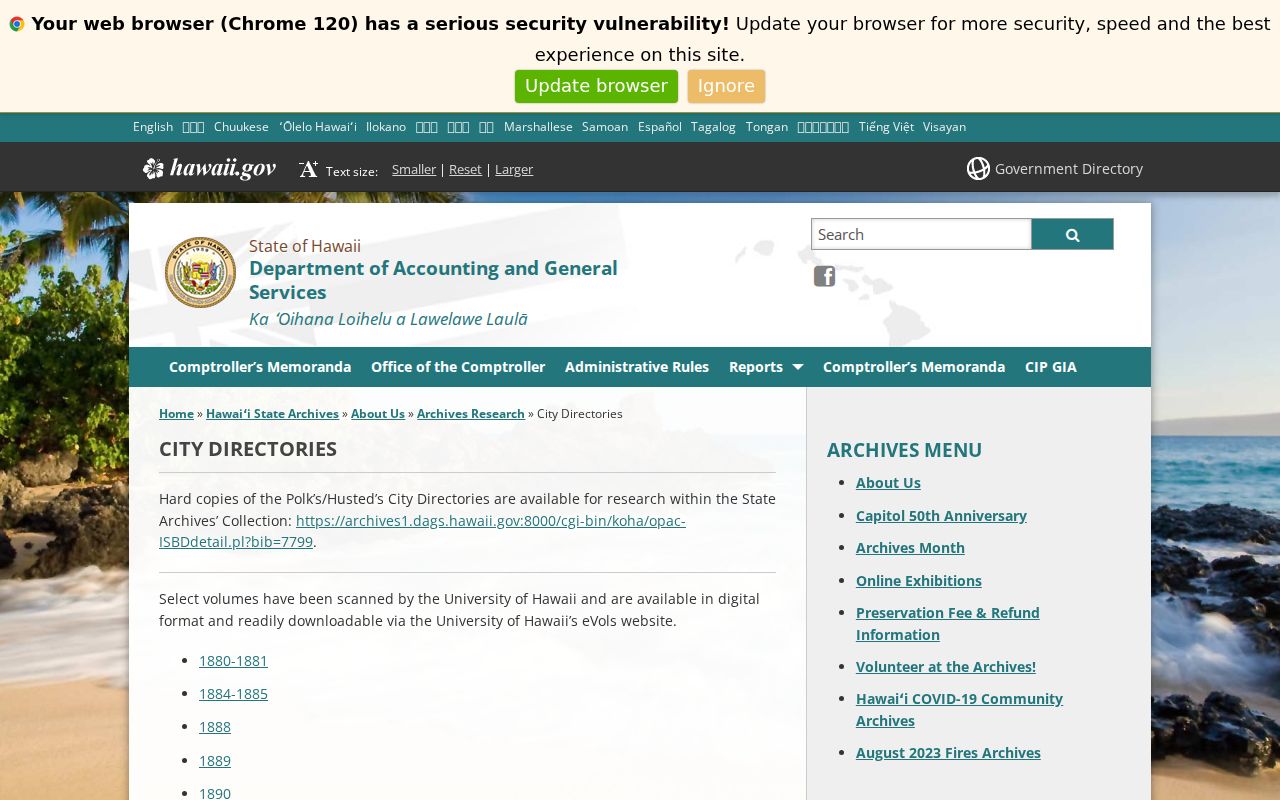
For a physical request, give the staff the publication year, title or publisher, and the name or street being checked. The volume itself is the source. Catalog text only proves that the repository holds it.
Read a Mililani Directory Entry
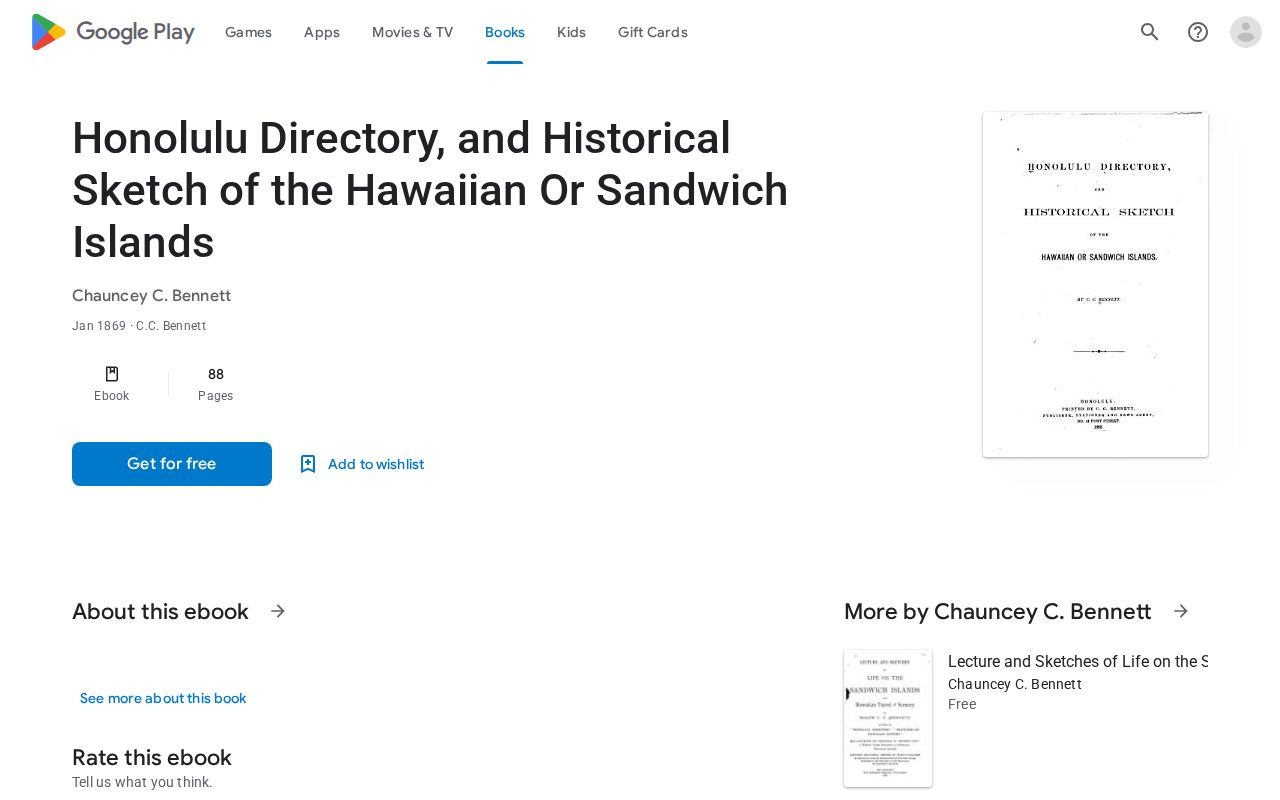
The public-domain 1869 C.C. Bennett volume shows a compact format. Entries can place a name beside a trade or firm, a work site, and a separate residence. It does not show a spouse, phone number, owner or renter mark, or a household roster. Later editions may add fields, but the abbreviation key for that exact book controls the meaning. Never carry a symbol from one publisher into another publisher's volume.
| Name | Surname and a given name or initial; test alternate spellings. |
|---|---|
| Role | Occupation, business, or firm, which gives historical context rather than present status. |
| Work address | A shop or office location that may differ from the home. |
| Residence | The address expressly labeled as the person's residence in that edition. |
| Source marker | Edition, page, and section needed to find the entry again. |
Open the digitized 1869 Honolulu directory before reading the sample image. Its typography makes the split between a work address and a residence easier to see.
- Criss-cross directory
- A later arrangement that lists an address first and points to the named subscriber or householder.
- Householder index
- An address-order list used to move from a building or street to the printed name.
- Abbreviation key
- The publisher's own list of shortened terms and symbols, usually near the front of the volume.
Search Mililani Streets by Year
For directories from 1908 forward, use the street index first when an old address is known. It turns the street and house number into a name. Then move to the alphabetical section to confirm the full entry and any business or occupation. For 1907 and earlier, the Historic Hawaiʻi Foundation research method warns that the search may need to begin with a known person and work backward.
Write down the street spelling, number, district or ward, firm, and the labels “residence” or “office.” Mililani Town's planned streets came later than many early Honolulu books. Search Mililani, Waipiʻo, Melemanu, Kipapa, and Central Oʻahu terms, with and without Hawaiian diacritical marks. An old map can resolve a road name that never appears under its current form.
Note: An address printed in a city directory is an occupancy clue, not proof that the named person owned the parcel.
Mililani Directory Years Matter
The publication line is evidence. A person absent from one book may have been omitted, unlisted, or caught in a missing edition. Hawaiʻi's directory chronology also changes title and publisher, so the same search must cross several series.
| Period | Directory milestone |
|---|---|
| 1869 | C.C. Bennett's Honolulu Directory offers an early inspected sample. |
| 1880–1893 | Bowser, McKenney, handbook, and kingdom directories cover parts of the sequence. |
| 1894–1910 | Husted volumes form the main run. |
| 1911–1941 | Polk-Husted titles move through Honolulu, Territory, and City and County editions. |
| 1941–1987 | Polk and City Directory of Islands series supply the later planned-community era. |
| January 2026 | State Archives announced 64 newly digitized index volumes across land, genealogy, and court collections. |
The 1968 marketing of Mililani Town's first homes falls within the later directory and phone-book era. Earlier books can still explain names and land context, but they should not be treated as a modern subdivision roll.
Phone Books Broaden Mililani Directories
Oʻahu telephone books bridge many of the years when a street or household may be hard to find in a city directory. HSPLS and UH holdings include microfiche from about 1894 through 1928, Mutual Telephone books from 1929 through 1953, Hawaiian Telephone from 1954 through 1979, and GTE from 1980 through 2001. Gaps exist within those spans.
A telephone entry identifies a subscriber and service address, not every resident. No listing can mean there was no service, the account used another name, the number was unlisted, or the volume is missing. Record the company, edition, year, page, and exact label. Do not republish a modern private number.
Confirm Mililani Directory Clues
Newspapers and maps help test a city-directory entry. HSPLS supplies the long newspaper runs, indexes, microfilm, and database access. Search a dated name with the street, a business, an obituary, or a civic notice. The Hawaiian Historical Society adds books, manuscripts, maps, photographs, pamphlets, and clipping files in a noncirculating research collection.
Review the Hawaiian Historical Society research rules and catalog before using the image below. The reading room works by appointment, so send the date range and alternate place-name spellings in advance.

Historic fire-insurance maps can also test a building footprint or former address, but known Oʻahu sheets from 1879 through 1955 vary by area. Pair the map edition with the directory year. A map outside Mililani's later planned footprint may still document the older regional setting, not the present house.
Trace Family Through Mililani Directories
Family-history work is strongest when each edition becomes one dated point rather than a full biography. A city directory may show where a named subscriber or householder was listed between census years. The next source should test the identity, the address, and the event that explains a change.
- Choose a known year and search the alphabetical section, including spelling variants and initials.
- Check the next available editions in both directions. Note each address, role, firm, and absence.
- Use the street index in later books to see who else was listed at the address.
- Pair the dated entries with the 1866, 1878, 1890, or 1896 Archives census indexes where relevant, then with later federal census sources available through library genealogy databases.
- Test a disappearance with newspapers, obituary indexes, deeds, maps, and an eligible vital-record request.
State Archives indexes cover vital material from 1832 to 1929, census years, and obituary entries from 1836 to 1950, but early reporting can be incomplete. Ask for the original when an index gives only a name and date. For a modern check after historical research, use the Mililani Town resident lookup and keep the old directory citation separate from current records.
What Mililani Directories Cannot Prove
A printed name does not prove ownership, every household member, or continuous residence. Business and home addresses can differ. A telephone book records the subscriber, while a city directory may use the householder or a selected adult. Streets changed names, houses were renumbered, and publishers made errors. Modern Mililani boundaries add another risk: USPS, the Census CDP, MTA, and neighborhood boards do not cover the same footprint.
Source discipline. Cite the year, publisher, page, section, and repository, then confirm the name and address in an independent dated record.
The strongest conclusion stays narrow: a named person was listed in a specific role at a stated address in one edition. For current ownership and address-keyed sources, move to the Mililani Town street directory. Never turn an old entry into a claim about who lives there now.